
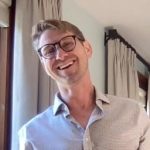
Holistic Jungian therapist specializing in trauma and relationships
My name is Colin Christman, and I am licensed in Connecticut as an LCSW. I completed my undergraduate education at Yale University in Political Science and Applied Mathematics. I completed my graduate education at the University of Connecticut.
The bulk of my prior work experience is in intensive care settings (largely inpatient or residential) for severe issues in behavioral health (substance use disorders, self-harm, suicidality, complex trauma, eating disorders, and other behavioral health problems such as gambling disorder, sex addiction, compulsive dishonesty, and kleptomania).
I have significant experience working with co-occurring trauma, behavioral health disorders, personality disorders, and mood or anxiety disorders. Given the complex, florid, and grave nature of many of these disorders, I have experience working within a family context with partners, parents, children, and siblings.
For whom it may be interesting, I have training in Internal Family Systems (IFS) and trauma-specific interventions. I would describe my overall therapeutic approach as psychodynamic, and most consistent with the ideas of Alfred Adler and Eric Berne. At times we may be joined by Emma, a certified emotional support dog.
I believe that most mental illnesses are diseases of absence, not diseases of presence. If you imagine influenza, it’s a disease of presence. There’s a bad thing present (the viral infection) that produces disease. By contrast, scurvy is a disease of absence. Lacking vitamin C for a prolonged period, the body cannot maintain healthy function.
I believe the role of therapy is to identify what’s missing in terms of emotional nutrition (safety, interpersonal connection, a sense of identity, a sense of community, a sense of purpose, a sense of capability, and structure are core examples, though there are others and biomedical possibilities as well).
From there, our goal is to determine why those psychological needs are persistently unmet, and how those unmet needs motivate self-destructive or maladaptive patterns in your life. Often in psychology we discuss cognition and emotion (thoughts and feelings). In truth, thoughts and feelings are only the mechanism by which the brain turns its understanding of what’s happening into a behavioral response. Our goal is to use those thoughts and feelings, in the context of your life, to discover underlying beliefs that produce too much negative emotion, too little positive emotion, or behavior that isn’t consistent with your values, your goals, or your wellbeing.
But where we start is a lot simpler: Who are you? What matters to you? What’s wrong in your life, and what would it mean for things to be right? We’re all in the process of trying to become a better version of ourselves. Therapy is the process of challenging and changing beliefs to progress toward a better relationship with others and, most importantly, ourselves.
Licensed · Professional · Cancel Anytime
Colin Christman is licensed in Connecticut as an LCSW (licensed clinical social worker), credential CT LCSW 58.013911. He completed undergraduate studies at Yale University in Political Science and Applied Mathematics and pursued graduate training at the University of Connecticut. Over five years of clinical work have focused largely on intensive care settings – primarily inpatient and residential programs – addressing severe behavioral health concerns.
His clinical experience includes treatment for substance use disorders, self-harm, suicidality, complex trauma, and eating disorders, as well as other behavioral health problems such as gambling disorder, sex addiction, compulsive dishonesty, and kleptomania.
Christman has substantial experience working with co-occurring trauma and behavioral health disorders alongside personality disorders and mood or anxiety disorders. Because many presentations are complex and involve family systems, he frequently engages partners, parents, children, and siblings as part of care.
He has training in Internal Family Systems (IFS) and trauma-specific interventions. His overall therapeutic orientation is psychodynamic, drawing on ideas associated with Alfred Adler and Eric Berne. At times sessions may include Emma, a certified emotional support dog.
Christman views many mental health problems as diseases of absence rather than diseases of presence. Using his analogy, influenza represents a condition created by a harmful presence, while scurvy results from a prolonged lack of vitamin C. In therapy he aims to identify what is missing in a person’s emotional nutrition – examples include safety, interpersonal connection, a sense of identity, community, purpose, capability, and structure – while recognizing there may also be biomedical factors.
The therapeutic work then explores why those psychological needs remain unmet and how unmet needs drive self-destructive or maladaptive patterns. He frames thoughts and feelings as mechanisms the brain uses to translate understanding into behavior, and uses them to uncover underlying beliefs that generate excessive negative emotion, insufficient positive emotion, or actions that conflict with a person’s values, goals, or wellbeing.
Initial questions in his work are straightforward: Who are you? What matters to you? What is wrong in your life and what would it mean for things to be right? Therapy, in his view, is a process of challenging and changing beliefs to move toward healthier relationships with others and, most importantly, with oneself.
Many people ask whether online therapy can truly help. For common concerns such as stress, anxiety, depression, relationship challenges, or navigating life changes, online therapy has been shown to be just as effective as traditional in-person sessions.
A major benefit is flexibility – you can meet with a therapist in the format that works best for you, whether video calls, phone sessions, live chat, or in-app messaging. This adaptability often makes it easier to maintain regular sessions and fit therapy into a busy life.
Therapists offering online care are licensed professionals, and you have the option to switch providers if you feel a different fit would be better. Online therapy can be a practical way to access licensed clinical support while managing the logistics of everyday life.
© All rights reserved.