
Holistic Jungian therapist specializing in trauma and relationships
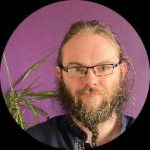
Hello! My name is Nathan Dean (he/him, cis/het), and I am a person-centered therapist based in the UK, working with clients all over the world. As a person-centered therapist, my role is to explore your lived experience; rather than give direct advice, we explore together what will work specifically for you, your circumstances, and your view of the world around you. Whether grief, depression, anxiety, or some of the more specific elements listed below, we can create a safe space together to explore your experiences. You can find out more about me from www.pronoiacounselling.com
I also bring in techniques and theories from other practices, such as gestalt and CBT, but I am always diving into other modalities to create a holistic approach for all my clients, whether part of the western canon of therapeutic techniques, or trying to decolonise my approach.
Below is a break down of what I can bring to your space. And this is key. This time is your time. Whatever you want to discuss, at the pace you feel is beneficial. I will guide, and challenge, where appropriate, but the core is that this is a safe, non-judgemental space for you to explore what you have collected along lifes journey.
Mental Health MOT
Sometimes, we don’t need anything more than a check-in with ourselves. Therapy is often seen as an intervention when things get to their worst point, but we can also relate to our therapeutic spaces as ones to explore where we are at when things are going well, or when the changes are less dramatic or intense. A MHMOT may be exactly what we need for this, an initial six sessions of examining the elements of our life to see where can use improvement, what is working, and where we are going. We’ll use things such as Maslow’s Hierarchy of Needs or the Japanese concept of Ikigai to map out where we’re at, and work from there.
COVID Consciousness
It is entirely understandable to feel as if the pandemic were a thing of the past, however most of the science indicates that COVID is still very much part of the fabric of our day to day lives, and due to its unique features as a virus is something to be taken very seriously. As a Covid Conscious Therapist, I honour the experiences of clients who are still isolating and taking precautions for themselves and loved ones. Alongside speaking of COVID caution directly, I offer you the opportunity to discuss isolation, boundary setting, and finding a community of shared values where COVID cautiousness is not seen as COVID anxiety, a term I do not entirely feel is accurate. It can be confusing to navigate these waters, and so I offer resources and insights of what it means to be immunocompromised, living with disability, or simply conscious to follow the science. I also run a group session on this platform to meet fellow COVIDers.
Living with Disability
As someone with a stoma bag, I’ve come to learn how to live with Crohn’s Disease, an ileostomy stoma, and the world that comes with. Disabilities are not always visible, and the world is not always designed to be the most beneficial for those of us with such disabilities. Whether living with Crohn’s, IBS, Colitis, stoma, or other disabilities, gastric or otherwise, we can explore what it means to live with conditions that can affect our energy levels, require adjustments for the day to day, and need extra attention now COVID is in our environment. Suffice to say, with whatever ails us, we can find a way of centering back to you, the self, and what benefits you. As I say to all my clients, it isn’t about right or wrong, but what serves you and what doesn’t.
Grief, Depression, Anxiety
Grief, depression, and anxiety are key terms we often come across in therapeutic spaces. Whether the grief of a passed loved one, the loss of a job, a change of living situation, or any other shift, change, or loss, having a place to explore what that grief means to us and how to sit with it is important. As well as this, depression and anxiety are such well-spoken elements of the current climate of our world, and once again having a place to understand it, explore it, and find ways of living with it are important. With some experience working with clinically diagnosed conditions and the malaise of the modern world, we can use CBT and gestalt therapies – bringing you to the present moment – to alleviate these sensations.
Masculinity
The role of the man has changed. As I’ve worked with more and more people who identify as men, with he/him pronouns, or the conventional gender binary, it is evident that our relationship with our masculinity requires examination. Whether managing anger, emotional regulation, or investigating your life purpose, what motivates you, what your new role is in society, we can use the safe space of the therapeutic conversation to figure out what this means in todays landscape. Once again using gestalt to bring to the present, CBT to emotionally regulate, and socially conscious person-centered therapy for your lived experience, we can sit in your truth to find what concerns you, what benefits you, and what can serve you in the future. You are not alone.
ADHD & Neurodiversity
ADHD has moved to quite a front-and-centre position in the modern world; whether a formal diagnosis from a medical practitioner, to self-diagnosing through finding commonality with the experiences of others, many people are finding they identify with ADHD, autism, and neurodiversity as a whole. With my own experiences with ADHD (self-diagnosed, whilst I await formal diagnosis), and working with students and clients who exhibit certain behaviours, traits, or thought-patterns which may might label as neurodiverse, we can use our space in the counselling room to explore your relationship to ADHD, autism, monotropism, or neurodiversity as a whole. This can include ways to structure your time, relationship guidance, and speaking of new developments in the field, such as rejection sensitive dysphoria.
Whatever concerns, problems, or emotions you may be facing currently, I endeavour to create a safe environment to explore your lived experience, the challenges of your life, and what will serve you moving forward. With my background in teaching (both mainstream and SEN), my person-centered approach, and my willingness to learn about different cultural, social, and political backgrounds, I hope we can work together to find what is best for you. This is your space. This is your time. This is your truth. Let’s explore it together.
Licensed · Professional · Cancel Anytime
Nathan Dean (he/him, cis/het) is a person-centered therapist based in the United Kingdom who works with clients across the world. With four years of clinical experience, he creates a therapeutic space that centers on each person’s lived experience and personal perspective.
As a person-centered practitioner, Nathan focuses on exploring what will work specifically for each client rather than offering direct advice. He aims to build a safe, non-judgemental environment where clients can take the lead – he will guide and, when appropriate, challenge – but the core remains the client’s time and pace.
Nathan draws on techniques and theory from gestalt and CBT and continues to study other modalities to shape a holistic approach. He brings together ideas from the western therapeutic canon while also working to decolonise his practice and tailor methods to individual needs.
One of the options he offers is a Mental Health MOT – an initial six-session review to map elements of life and identify what is working and where change might help. Tools such as Maslow’s Hierarchy of Needs and the Japanese concept of Ikigai are used to assess current priorities and goals and to plan next steps.
As a Covid Conscious therapist, Nathan honours clients who continue to isolate or take extra precautions. He provides space to discuss isolation, boundary setting, and finding communities with shared values around cautiousness, and he offers resources and insights related to being immunocompromised or living with disability. He also runs a group session on this platform for people who identify as COVID cautious to meet one another.
Living with disability is part of Nathan’s lived experience. He has a stoma bag and lives with Crohn’s Disease and an ileostomy stoma, which informs his understanding of conditions that affect energy, daily routines, and care needs. He works with people living with Crohn’s, IBS, Colitis, stomas, and other gastric or non-visible disabilities to explore practical adjustments and wellbeing strategies. He often reminds clients that therapy is not about right or wrong but about what serves them and what does not.
Nathan works with a wide range of concerns including stress, anxiety, grief, self-esteem, depression, coping with life changes, addictions, relationships, family issues, trauma and abuse, intimacy-related concerns, eating and sleeping difficulties, parenting, anger, career matters, compassion fatigue, and ADHD. He identifies as a male, liberal therapist. For more information he can be found at www.pronoiacounselling.com.
© All rights reserved.