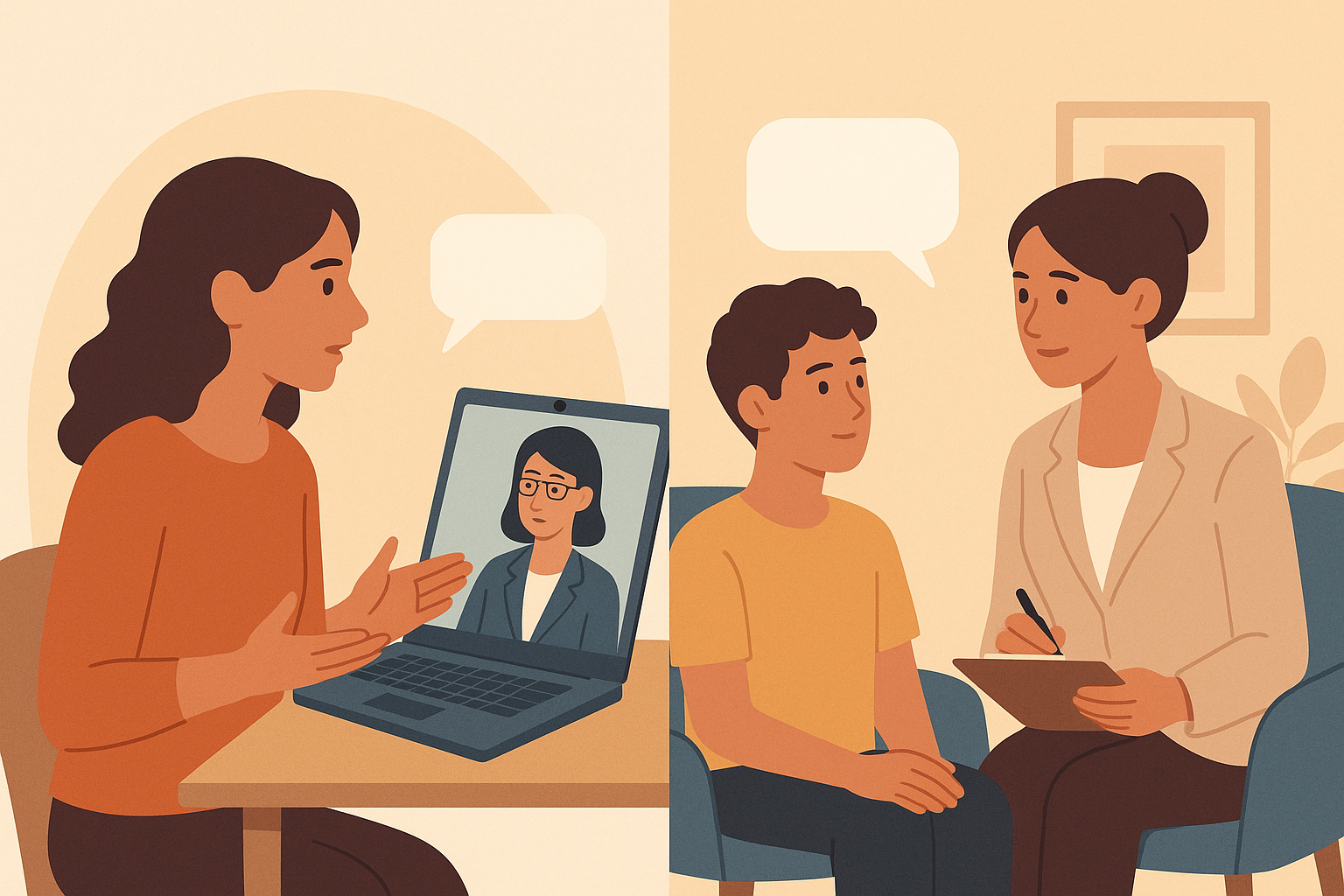
Therapy has changed. What used to mean sitting in a softly lit office now often includes logging into a secure video session from your couch. The question is no longer can you access therapy online, but should you?
The answer depends on your lifestyle, comfort level, needs – and sometimes just your gut feeling. Both formats have their advantages. Both can be deeply effective. But they’re not the same.
Here’s what to consider when deciding which one is right for you.
Online therapy wins when it comes to sheer accessibility. You can schedule a session over lunch, skip the commute, and speak to your therapist from home, your car, or even a park bench – anywhere with a bit of privacy.
This can be a game changer for:
In-person therapy, on the other hand, comes with built-in structure. Leaving your home and arriving at a physical office can create a mental shift – it’s a boundary, a container. That transition itself can be part of the healing process.
There’s something grounding about being in a dedicated space for therapy. No dishes in the sink, no spotty Wi-Fi, no distractions. Just you, your therapist, and the work.
Some people find this physical separation helpful – it reinforces that this hour is about them. The therapist’s office becomes a safe, neutral place where hard things can be said.
Online therapy requires you to create that space for yourself. That might mean finding a quiet room, putting your phone on do not disturb, or using headphones to stay present.
For many, that’s totally doable. For others, it’s a challenge.
Some people open up more when they’re physically with someone. Eye contact, body language, even silence – all of it feels more real. The therapist’s presence can feel more stabilizing during emotional moments.
Others feel safer sharing from behind a screen. The distance makes vulnerability a bit easier. They might find it easier to say the hard things when they’re in their own environment – wrapped in a blanket, sipping tea, knowing they don’t have to walk through a waiting room after crying.
It’s not about one being better. It’s about where you feel emotionally safe.
Online therapy relies on tech. That means:
Most platforms are simple to use, but glitches can happen – video freezes, lag, or dropped calls. For some people, even the possibility of tech issues adds stress.
In-person therapy avoids all that. It’s analog. It’s present. It’s uninterrupted. But it also means planning your route, finding parking, and carving out travel time.
Some therapy styles adapt better to video than others. Talk therapies like CBT, ACT, and solution-focused approaches work well online. Many therapists have adjusted their techniques to suit remote sessions without sacrificing depth.
However, certain types of therapy – like EMDR, somatic therapy, or more experiential modalities – can sometimes work better in person, especially when body-based techniques or physical presence matter.
It’s worth asking a potential therapist how they adapt their methods to each format.
Online therapy platforms often offer lower rates, package deals, or subscription models. Some are covered by insurance. Others are private pay.
In-person therapists may charge more per session, especially in high-demand areas. But they might also offer sliding scales or accept local insurance plans.
There’s also the question of availability. If your local area has long waitlists, online therapy can expand your options dramatically – giving you access to licensed professionals across your state or country.
Consider in-person therapy if:
Consider online therapy if:
There’s no universally “better” option – only what’s better for you. What matters most is finding a therapist you trust, feel safe with, and can grow alongside.
Some people start online and later move to in-person. Others mix both. The format is flexible. The important part is showing up.
Therapy is still therapy – whether on a couch or a screen.
© All rights reserved.